Formula Student
Latching Board
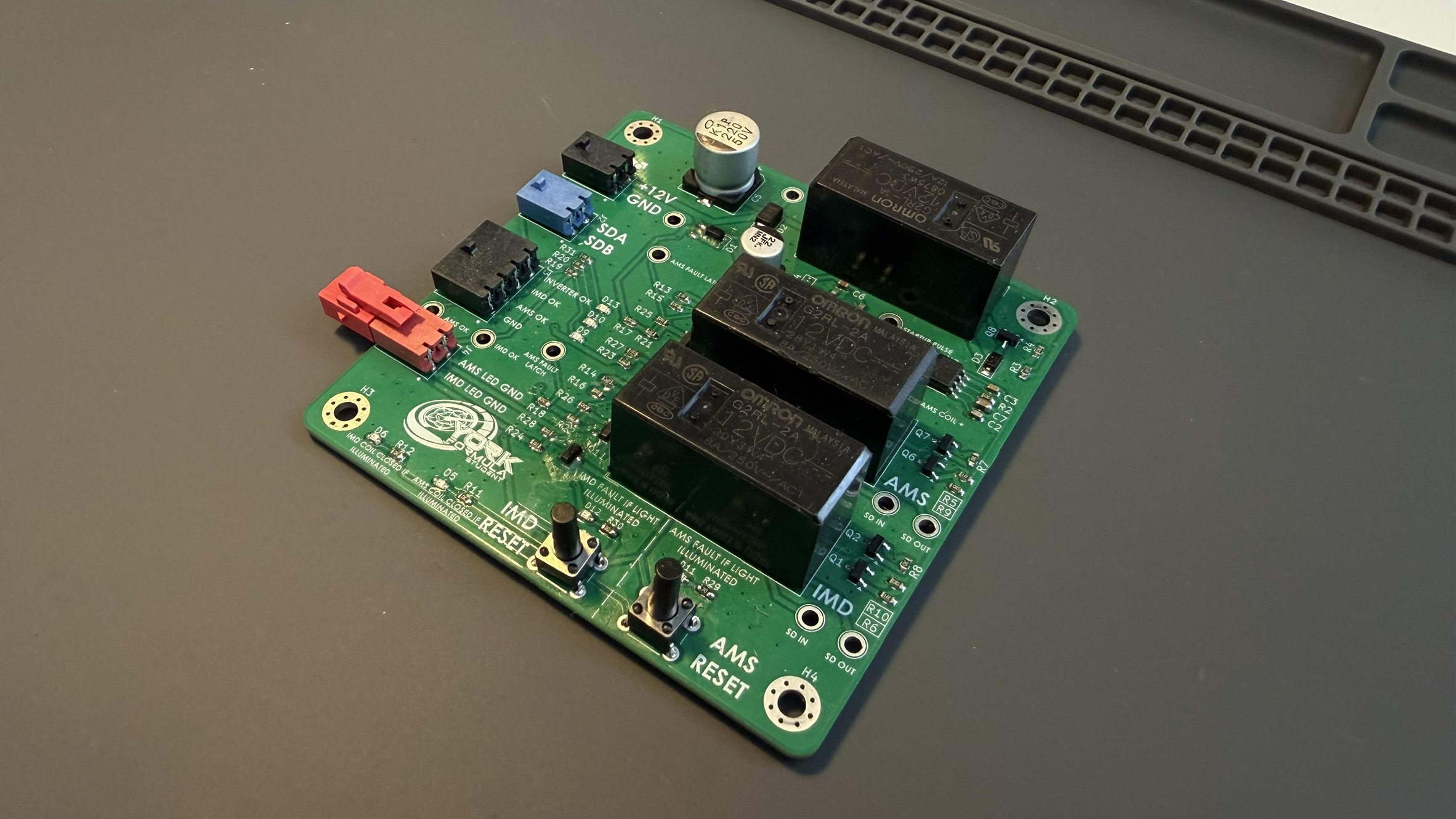
A custom safety PCB designed for the York Formula Student electric vehicle. The board monitors critical AMS, IMD and inverter safety signals, using hardware-based latching logic to open the vehicle shutdown circuit when a fault is detected. It also provides manual fault reset, dashboard status outputs and onboard diagnostic LEDs.
01
Design Details
The latching board forms part of the vehicle's shutdown circuit, controlling whether the high-voltage battery contactors are permitted to close. It receives 12 V OK signals from three safety-critical systems: the inverter, Insulation Monitoring Device (IMD), and Accumulator Management System (AMS).
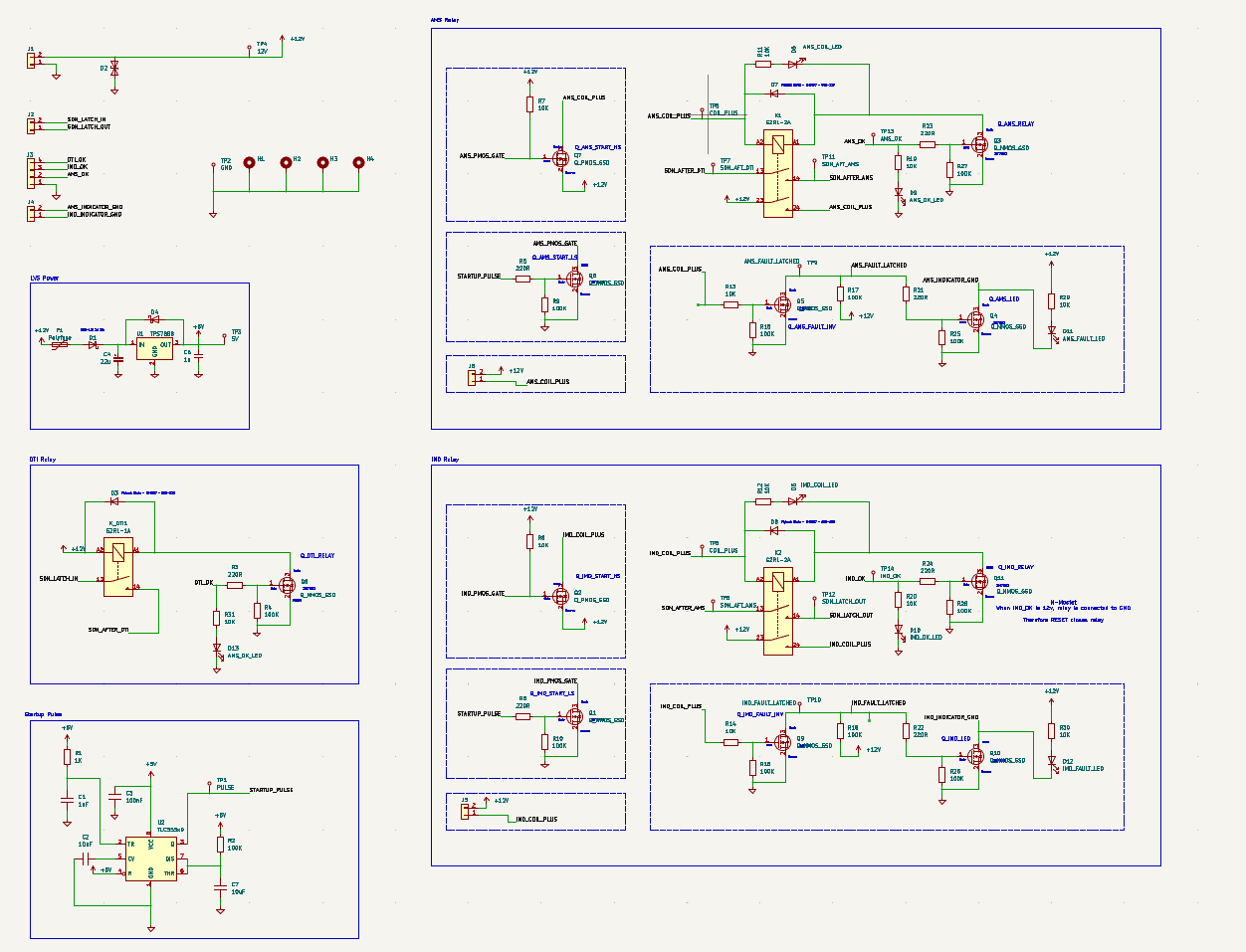
During vehicle startup, a 555 timer generates a short startup pulse, allowing the safety relays to energise provided all required OK signals are present. Once all three relay channels are closed, the shutdown circuit is completed and the vehicle can progress towards its Ready-to-Drive state.
The AMS and IMD channels incorporate hardware latching functionality. If either system reports a fault, the corresponding relay opens the shutdown circuit and the high-voltage contactors are opened. Even if the fault signal subsequently returns to normal, the circuit remains latched open until a manual reset is performed.
The PCB also incorporates flyback protection, power conditioning, diagnostic LEDs, test points and ground-switched dashboard outputs, providing protection for the control circuitry while simplifying vehicle integration, testing and fault diagnosis.
02
Revision B - Pending
During testing and validation, issues were identified with the diagnostic LEDs that were addressed in Revision Two. The LEDs indicating relay coil state were originally driven from the switched side of the relay, meaning they could illuminate without accurately representing whether the coil was energised. These LEDs were moved directly in parallel with the relay coils, ensuring they provide a true indication of coil state.
Connectors were also added for the external reset buttons, allowing them to be mounted away from the PCB on a dedicated vehicle diagnostics panel. This improved both accessibility and integration of the board within the vehicle.